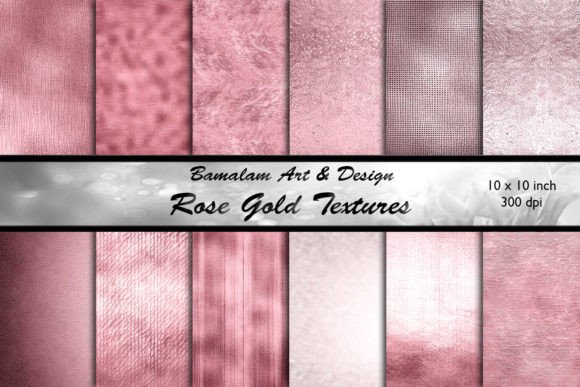
Understanding Rose Gold Metal Textures for Creative Projects
In the world of digital design and physical crafting, finding a background that balances elegance with modern appeal can be challenging. Rose gold metal textures have emerged as a versatile solution for creators seeking a sophisticated aesthetic without the heavy cost or logistical complexity of sourcing physical materials. These digital assets provide a realistic simulation of metallic foil, offering the visual depth and shimmer associated with rose gold while remaining entirely editable within software environments.
Unlike standard flat colors or simple gradients, high-quality metal textures capture the nuances of light reflection, surface imperfections, and grain. This article explores what makes these textures distinct, how they compare to other design methods, and practical scenarios where they offer the best value for your projects.
Distinguishing Features of Rose Gold Metal Textures
The primary allure of rose gold metal textures lies in their ability to mimic real-world materials digitally. When you view a high-resolution image of rose gold, you are seeing more than just a pink hue; you are observing a complex interplay of warm pinks, soft peaches, and subtle silver undertones that shift depending on the angle of light. In a digital format, this is achieved through detailed lighting maps and noise patterns that simulate the microscopic scratches and smoothness found on actual metal surfaces.
What sets a premium collection apart from basic clip art is resolution and file integrity. Professional-grade textures, often delivered as 3000 x 3000 pixel JPEG files at 300 DPI, ensure that the image remains crisp whether it is printed on a small business card or scaled up for a large poster. The 10x10 inch dimensions provide ample flexibility for cropping and composition, allowing designers to isolate specific areas of shine or shadow to create unique focal points.
These textures are not merely decorative overlays; they function as foundational elements. They provide a tactile quality that flat designs lack, adding a layer of perceived value to invitations, greeting cards, and packaging. The "metal" aspect implies durability and luxury, which is why these backgrounds are frequently chosen for events like weddings, anniversaries, and corporate branding where a touch of opulence is desired.
Evaluating Alternatives and Design Approaches
When planning a project involving a metallic look, creators often weigh several options. Understanding the tradeoffs between rose gold metal textures, physical foiling, and vector graphics is essential for making an informed decision.
Comparison with Physical Foil Stamping
Physical foil stamping involves applying a real metallic sheet to paper using heat and pressure. While this method produces a genuine metallic sheen that cannot be perfectly replicated by ink, it comes with significant constraints. It requires specialized equipment, minimum order quantities, and higher costs per unit. Furthermore, physical foil is difficult to modify once applied; if a text color needs to change or a layout adjustment is required, the entire print run may need to be restarted.
In contrast, digital rose gold metal textures offer immediate flexibility. You can apply the texture to any number of variations, adjust opacity, blend modes, or overlay different fonts instantly. For small-batch printing, custom gift tags, or DIY scrapbooking, digital textures eliminate the setup costs and time delays associated with traditional foil stamping.
Comparison with Vector Gradients and CSS Effects
Web designers and app developers often rely on CSS gradients or SVG (Scalable Vector Graphics) to create metallic effects. While vectors are excellent for scalability and small file sizes, they can sometimes appear too uniform or "plastic" compared to the organic randomness of a scanned metal texture. A gradient might simulate the color shift of rose gold, but it lacks the micro-texture—the tiny specks and grain—that gives metal its realism.
Rose gold metal textures excel when the goal is photorealism. If a project requires the image to look like a photograph of a physical object, such as a product mockup for a phone case or a tumbler, a raster-based texture at 300 DPI provides the necessary detail. However, for UI elements that need to scale infinitely without losing quality, a well-crafted vector might still be the superior choice.
Practical Applications and Use Cases
The versatility of these textures allows them to bridge the gap between digital design and physical production. Below are specific scenarios where utilizing a collection of 12 metal textured backgrounds can enhance a project.
- Invitations and Greeting Cards: The romantic yet modern shade of rose gold pairs exceptionally well with wedding stationery and holiday greetings. The texture adds weight and importance to the card stock, elevating the perceived quality of the message. Using a dark font over the lighter sections of the texture ensures readability while maintaining the elegant aesthetic.
- Gift Tags and Scrapbooking: For hobbyists, these textures serve as instant embellishments. Instead of purchasing expensive metallic paper rolls, a user can print the texture onto standard cardstock or adhesive labels. The variety within a set of 12 allows for consistency across a series of items, such as matching gift tags with a scrapbook page cover.
- Sublimation Printing: One of the most popular applications for high-resolution textures is sublimation. By printing the texture onto transfer paper and applying it to polyester-coated items like tumblers, mugs, or phone cases, the design becomes part of the material rather than sitting on top of it. The 300 DPI resolution is critical here to prevent pixelation when the image wraps around curved surfaces.
- Business Cards and Branding: In a competitive market, a business card with a subtle metallic background stands out. A rose gold texture can convey creativity and attention to detail, particularly for industries like beauty, fashion, or lifestyle coaching. It offers a softer alternative to the stark black-and-white or cold steel looks often seen in corporate design.
Decision Factors: When to Choose Digital Textures
Selecting the right asset depends heavily on the intended output and the resources available. Here are key factors to consider when deciding if rose gold metal textures are the right fit for your workflow.
Volume and Budget: If you are producing fewer than 50 copies of a design, digital textures are almost always the most cost-effective route. The one-time purchase of a digital pack eliminates the recurring costs of setup fees and minimum orders associated with professional printing services.
Customization Needs: If your project requires frequent changes to text, logos, or layouts, digital assets are indispensable. You can easily swap out the background texture or adjust the color balance to match a new brand palette without reprinting physical materials.
Material Limitations: Not all printers support metallic inks or foil transfers. Many home inkjet or laser printers, as well as local print shops, work best with standard CMYK inks. Using a high-quality digital texture allows you to achieve a metallic look using standard printing processes, provided the printer has good color accuracy.
Potential Limitations
While highly effective, digital textures do have limitations. They cannot replicate the actual tactile sensation of raised foil or the way real metal catches the light from different angles in a physical space. If a client specifically requests a "real foil" effect for a luxury item, a digital texture might fall short of their expectations upon close inspection under bright lights.
Additionally, the success of the final print relies on the quality of the monitor used for proofing. Colors on screen may appear slightly different than they do on paper due to monitor calibration and printer ink profiles. It is always advisable to request a physical proof before committing to a full print run.
Maximizing the Value of Texture Collections
To get the most out of a set of 12 rose gold metal textures, users should explore the differences between each file. Variations in lighting, grain density, and color temperature allow for dynamic compositions. For instance, a darker, more saturated texture might be ideal for a bold headline, while a lighter, softer version could serve as a subtle backdrop for body text.
Combining these textures with other design elements can further enhance the result. Layering a transparent white brush stroke over the metal texture can simulate a scratch or highlight, adding to the realism. Similarly, using blending modes like "Overlay" or "Soft Light" in editing software can integrate the texture seamlessly with underlying images, ensuring the metal effect feels natural rather than pasted on.
For those interested in DIY crafts, the 300 DPI resolution ensures that even when printed on smaller formats like gift tags or notebook covers, the image retains its sharpness. This prevents the "fuzzy" look that often occurs when low-resolution images are stretched, preserving the professional finish that rose gold is known for.
Conclusion on Selection and Usage
Ultimately, the choice to use rose gold metal textures is a strategic one that balances aesthetics, budget, and production capabilities. They offer a compelling middle ground between the high cost of physical foil and the limited realism of basic digital gradients. Whether you are designing a wedding invitation suite, creating custom merchandise for a small business, or simply enhancing a personal scrapbook, these textures provide a reliable tool for adding a touch of modern elegance.
By understanding the strengths of digital textures and knowing when to employ them versus other methods, creators can produce high-quality work that resonates with audiences. The availability of multiple variations in a single package allows for experimentation and consistency, making it a valuable resource for anyone looking to elevate their visual communication.