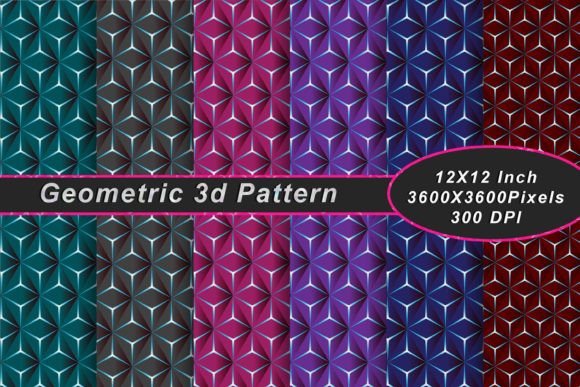
Evaluating the Utility of Geometric 3d Pattern Backgrounds for Creative Projects
In the realm of digital design and physical crafting, the demand for versatile, high-quality visual assets has never been higher. Among the various aesthetic options available to designers, hobbyists, and small business owners, Geometric 3d Pattern Background sets have emerged as a powerful tool for adding depth, structure, and modern appeal to a wide array of projects. These digital papers are not merely decorative; they serve as foundational elements that can elevate simple designs into professional-grade works. This analysis explores the specific characteristics, applications, and technical specifications of a curated set containing six distinct geometric patterns, helping you determine if this resource aligns with your creative needs.
Understanding the Appeal of 3D Geometric Designs
Geometric patterns have long been a staple in interior design, fashion, and graphic arts due to their inherent sense of order and balance. However, the shift toward 3D geometric backgrounds represents a significant evolution in visual storytelling. By introducing depth, shadow, and perspective to flat shapes, these designs create an illusion of volume that captures attention more effectively than traditional 2D motifs. This three-dimensional effect adds a layer of sophistication, making it ideal for brands seeking a modern, tech-forward, or minimalist aesthetic.
The specific set under review features six unique vector-based patterns. Unlike raster images that can lose clarity when scaled, vector formats ensure that every line, angle, and curve remains crisp regardless of the output size. This is particularly crucial for large-format prints such as wrapping paper or wall decals, where pixelation would otherwise ruin the visual integrity. The inclusion of both EPS and PNG formats within this set provides flexibility, allowing users to choose the best file type for their specific software and workflow requirements.
Technical Specifications and File Formats
When evaluating digital assets, the technical details often dictate the usability and final quality of the project. This particular collection offers a robust combination of formats designed to accommodate different user expertise levels and software capabilities.
- EPS Files (Vector): The set includes six EPS files, each sized at 12″x12 inches. EPS (Encapsulated PostScript) is a standard vector format widely supported by professional design software like Adobe Illustrator and InDesign. Vectors are essential for editing; they allow you to change colors, resize elements, and manipulate shapes without any loss of quality. This makes them perfect for customizing the pattern to match a specific brand palette or adjusting the scale for different print dimensions.
- PNG Files (Raster): Complementing the vectors are six PNG files with a resolution of 3600 x 3600 pixels. At 300 DPI (dots per inch), these images are print-ready for high-quality physical outputs. PNGs are universally compatible with almost all image editing programs, including Photoshop, GIMP, and even basic word processors or social media platforms. They are ideal for users who do not have access to vector-editing software but still require high-resolution graphics for printing or web use.
All files are compressed into a single ZIP archive for easy download and organization. While this is a standard practice, users should be aware that extracting the files—either by double-clicking on most operating systems or using dedicated extraction tools—is a necessary first step before accessing the assets. Proper file management ensures that these high-quality resources remain organized within your digital library.
Versatility Across Creative Disciplines
One of the primary advantages of this digital paper set is its cross-disciplinary applicability. The term "digital paper" might suggest limited use, but the reality is far broader. The structured yet dynamic nature of 3D geometric patterns allows them to function as backgrounds, textures, or focal points depending on how they are utilized.
Graphic Design and Branding
For graphic designers, these patterns offer a quick way to add texture to corporate identities. They are suitable for creating business cards, logos, and sites that need to convey precision and innovation. A subtle 3D geometric background on a website header can enhance user engagement without overwhelming the content. Similarly, for packaging design, these patterns provide a shelf-ready look that stands out in retail environments. The ability to edit the EPS files means designers can tweak the color scheme to align perfectly with seasonal campaigns or product themes.
Print Media and Stationery
The stationery market relies heavily on aesthetics and tactile experience. This set is particularly well-suited for handmade stationery, invitations, and place cards. For weddings and formal events, a monochromatic or pastel-toned 3D geometric pattern can lend an air of elegance and modernity. In contrast, bold colors applied to the same pattern can create energetic designs for birthdays and parties. The 12″x12 inch size is also standard for scrapbooking paper, making it easy to integrate into scrapbooking layouts and planner stickers.
Physical Crafts and DIY Projects
Beyond digital screens, these assets bridge the gap between virtual design and physical creation. Crafters can use the high-resolution PNGs to create custom wrapping paper at home, saving money and reducing waste compared to store-bought options. The patterns are equally effective for decoupage, where they can be glued onto surfaces to create intricate designs on boxes, frames, or trays. Furthermore, the durability and clarity of the 3D design make it suitable for decorated furniture projects, where the pattern can be transferred onto tables, chairs, or cabinets to give them a refreshed, contemporary look.
Jewelry and Small Accessories
Smaller items benefit from detailed patterns that catch the light. When printed on cardstock or thin plastic for jewelry tags or backing cards, the 3D effect adds perceived value to handmade goods. It transforms a simple tag into a branded element that enhances the unboxing experience for customers. This attention to detail is a key factor in building customer loyalty for small businesses selling handmade items.
Comparing Geometric 3D Patterns with Alternatives
While 3D geometric backgrounds are highly versatile, they are not the only option available. Understanding how they compare to other styles helps in making an informed decision.
vs. Floral or Organic Patterns: Floral patterns evoke nature, softness, and tradition. They are often preferred for romantic themes, spring collections, or vintage-inspired designs. In contrast, Geometric 3d Pattern Background choices lean towards modernity, structure, and neutrality. If your project requires warmth and organic flow, floral may be superior. However, if you need a clean, professional, or futuristic look, geometric patterns are the better fit.
vs. Solid Colors: Solid color backgrounds are timeless and minimize distraction, making them excellent for text-heavy designs like resumes or reports. However, they can appear flat or boring in creative contexts. Adding a 3D geometric pattern introduces visual interest and depth without competing with primary content, striking a balance between simplicity and complexity.
vs. Photographic Textures: Photo textures (like wood grain or concrete) offer realism but can be difficult to control in terms of color matching. Vector-based geometric patterns allow for precise color customization via the EPS files, ensuring seamless integration with other design elements. This level of control is a significant advantage for brand consistency.
Decision Factors: Is This Set Right for You?
Choosing the right digital asset depends on your specific goals, technical skills, and budget. Here are several factors to consider when evaluating this set of six geometric patterns.
- Editing Needs: If you plan to modify the colors or shapes extensively, the EPS vector files are indispensable. If you only need to place the image as-is into a document, the PNGs are sufficient and easier to handle in non-professional software.
- Print Quality Requirements: For large prints (such as banners or full-page book covers), the 3600 x 3600 px resolution at 300 DPI is adequate. However, for extremely large format printing (billboards), you would ideally rely on the vector EPS files to scale up infinitely without quality loss.
- Project Variety: If you engage in multiple types of crafts—from digital social media banners to physical decoupage—the dual-format nature of this set provides maximum utility. You get both the flexibility of vectors and the convenience of ready-to-use rasters.
- Aesthetic Alignment: Consider the tone of your project. Geometric 3D patterns work best for modern, minimalist, tech-oriented, or structured designs. They may feel out of place in rustic, bohemian, or highly emotional/narrative-driven projects where softer visuals are preferred.
Conclusion
The availability of high-quality digital papers has democratized professional design, allowing individuals and small businesses to produce polished materials without extensive graphic design training. A Geometric 3d Pattern Background set offering six distinct, high-resolution, and editable patterns is a valuable addition to any creative toolkit. Its strength lies in its versatility, bridging the gap between digital display and physical craft. Whether you are designing a wedding invitation, creating custom packaging, or updating a website’s visual identity, these patterns provide a reliable foundation for modern aesthetics. By understanding the trade-offs between vector and raster formats, and recognizing the stylistic implications of geometric design, you can leverage these assets to enhance your projects effectively. Ultimately, the choice depends on your need for customization versus convenience, but the inclusion of both EPS and PNG formats ensures that this set meets a broad spectrum of user requirements.